Keep your vitality. A life without health is like a river without water. Maxime Lagacé

Osteoarthritis is a degenerative joint disease where most people suffer from chronic pain due to inflammatory joint. It is caused by the wear and tear of cartilage, causing friction to exists between ends of the bones. The pain is so agony that they often seek for medication like glucosamine or non-steroidal anti-inflammatory drugs (NSAIDs).
Why Glucosamine is not recommended?
Most supplemental glucosamine in the market is derived from the shells of farmed shellfish, such as the shells of shrimp and crabs. As much as 80% of the shells used to manufacture glucosamine supplements are from shellfish farmed in China. To ensure profitability and secure high economic returns, some farmers use antibiotics and growth hormones during cultivation. These chemicals are harmful to humans.
Shark cartilage is commonly used to produce chondroitin sulphate products. Sharks, being at the top of the marine food chain, tend to bioaccumulate toxins like methylmercury from their polluted habitat and contaminated prey. Methlmercury is evenly distributed in fish muscle, neural tissue, and cartilage. Mehtylmercury is the most toxic form of mercury. It affects the immune system (health) and ravages the nervous system (brain) if we were to ingest them of course.
Apart from the environmental impact and contamination issues, there are other concerns about supplemental glucosamine. They include insulin resistance, overall ineffectiveness, and interactions with medications. High doses or prolonged use of glucosamine can cause the death of pancreatic cells and increase the risk of developing diabetes. Moreover, researches reported that glucosamine, chondroitin, and their combination did not result in a relevant reduction of joint pain or affect joint space narrowing compared with a placebo.
You might thought of manmade glucosamine made in the laboratory to avoid some of the side effects mentioned above. But every medications or drugs come with side effects. Practically speaking, glucosamine is no cure to Osteoarthritis, it is merely a painkiller. All you can do to prevent this prevalent disease is to start adopting the healthy diet as soon as possible even when you’re only 20!
What Should You Do?
Include these foods more frequently in your diet for your joint and bone health.
1. Brown Algae
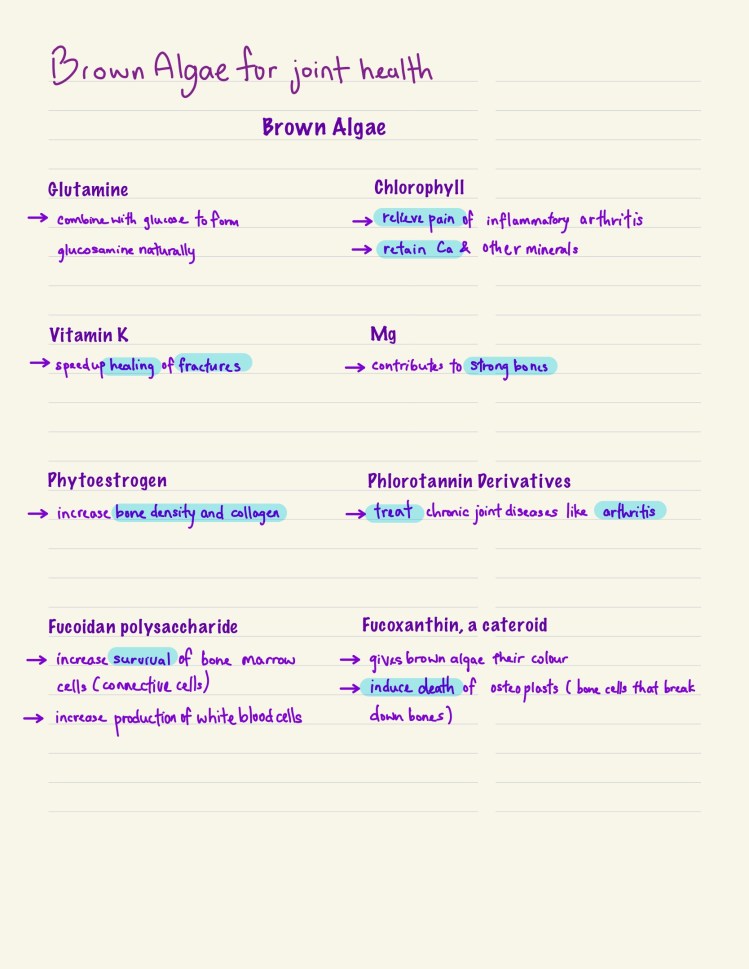
Brown algae contains Glutamine, Chlorophyll, vitamin K, Magnesium, Phytoestrogen, Phlorotannin Derivatives, Fucoidan polysaccharides and Fucoxanthin. Each of them plays an important role in maintaining healthy joints and bones.

2. Ginger
In China, reports shows that fresh ginger has been highly effective for rheumatism. In the U.S., a study on 247 osteoarthritis patients showed that those who tool a standardised and highly concentrated extract of ginger twice daily experienced greater reduction of knee pain than those given a placebo.
Ginger is rich in a wide range of minerals, including Calcium (Ca), Iron (Fe), Magnesium (Mg), Phosphorus (P), and Potassium (K). A serving of 100g of ginger provides 11% of the Manganese (Mn) an adult requires per day, making it ideal for bone nourishment. Manganese helps produce new blood cells in bone marrow and is vital for the correct structure of cartilage, tendons, teeth, and bones.
Ginger reduces inflammation by preventing overproduction of tumour necrosis factor and interleukin-1, which are cytokines that cause inflammation, pain, and damage to cartilage when tissue is injured.
3. Spinach
Spinach is a rich source of glutamine and vitamin K. It promotes bone health with chlorophyll, magnesium, manganese, calcium, and vitamin C.
Scientist conducted a study on 1,112 men and 1,479 women aged 50-68. Researchers measured each subject’s bone mineral density at the his and spine and surveyed individuals about their diets. They found that low vitamin K intake was related to low bone mineral density in women.
The research team noted that the study results for women were consistent with reports linking low dietary vitamin K to increase hip fracture risks. A 100g serving of spinach provides 604% of an adult’s daily vitamin K requirement.
 What is Osteoarthritis? And what to do about it?